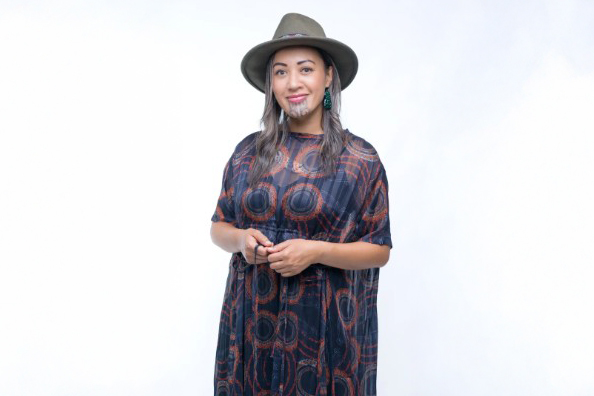


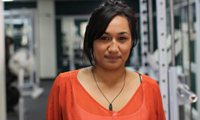

















Karyn Matiaha (Ngāi Tūhoe, Ngāti Kahungunu ki Wairarapa, Ngāriki Kaiputahi) was quite literally brought up in the world of Māori performing arts, going along to classes run by Te Wānanga o Aotearoa (TWoA) from the moment she was born.
Many of Karyn’s whānau studied TWoA’s Māori Performing Arts programme in their home of Mangatū, Gisborne over 20 years ago, including her mum who was hapū (pregnant) with Karyn at the time.
“Even when I was born I would be taken along to all of their practices, their wānanga and their performances. From when I was in my mum’s puku (tummy) right up until I went to kōhanga,” says Karyn who studied Kaawai Raupapa - Certificate in Māori Performing Arts at TWoA’s Whirikoka, Gisborne campus.
20-year-old Karyn felt called to study Māori performing arts after reading a panui (public notice) from local kaiako (teacher), Te Rina Armitt who hoped to take the art form to a new level both within TWoA and the Gisborne community.
For Karyn, completing the certificate and gaining the knowledge and the skills that came from the programme was also her way of giving back to her whānau.
“I just wanted to contribute to the kaupapa (programme) and give back to my mum, my iwi and my whānau at home in Mangatū. They all studied Māori performing arts because of their love for music, dance and our culture.”
Karyn grew up immersed in te ao Maori, attending kōhanga reo, kura kaupapa Māori and was very active in kapa haka.
But since finishing high school she found it hard to stay connected with her culture and the Māori arts.
“Since I left school everything has been te ao Pākehā. So I want to acknowledge my kaiako, Te Rina who brought me back to te ao Maori (Māori worldview) and Māoritanga (Māori culture) again.”
Although Karyn was active in kapa haka throughout her schooling, she still managed to gain a range of new knowledge from the programme.
“The programme was amazing because even though I was brought up in the kapa haka world it was still so different. They do have similarities but there is a lot of different tikanga (customs).”
Karyn was eager to encourage others to study the programme no matter their ability or confidence, saying, “just go for it, there’s a heap of skills, kōrero (narrative) and māramatanga (meaning) behind Māori performing arts.”