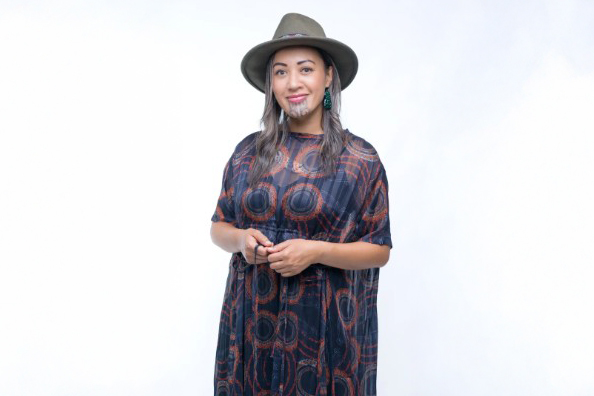
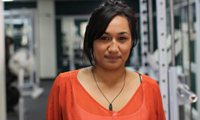










Gifting her first kete to her grandmother revealed things about her family history that Erin Rauna never knew.
“I gifted my first kete to my nanny and from that came many things,” says Erin (Ngāti Kahungunu).
“I found out that my great grandmothers were weavers, up until then my nanny had never, ever shared that with me.”
Erin, who teaches Ngā Mahi ā te Whare Pora: Toi Paematua - Diploma in Māori and Indigenous Art at Te Wānanga o Aotearoa’s Whirikoka campus in Gisborne, had a military upbringing in Trentham and Waiouru. Attending Te Aute college kept Erin in touch with her Māori Heritage
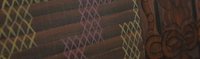
Erin says she always held a longing for Toi-Māori – and a fascination for the art of raranga (weaving) - and the amazing things that could be made from harakeke (flax) and the refined, silky product within it, muka.
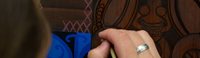
She was introduced to the art under master weavers Veranoa Hetet-Hauwaho and her mother Erenora Puketapu-Hetet in 2001 while her husband (Te Wānanga o Aotearoa kaiako Tiopira Rauna) was learning whakairo (carving) under master carver Rangi Hetet at Waiwhetu.
“It was such a positive and encouraging way of learning. A huge inspriation for how these taonga should be passed on.”
“What I noticed is that when you were ready you were shown the next part. You weren’t given something you weren’t ready for.”
“I try and maintain this in my class. We work around a kaupapa but there are layers I take away if the tauira isn’t ready or layers I can add if they understand it.”
Erin, who returned back to Gisborne in 2005 and completed a Bachelor of Fine Arts through Toihoukura eight years later, credits Parekowhai “Aunty Polly” Whaitiri and Christina Wirihana as two other major influences in her raranga.
She says the art form has been a voyage of strengthening her Māoritanga and her evolving practice.
“It’s been a journey, a vessel back to my raranga whakapapa. Knowing you are continuing the mahi of your tūpuna is rewarding. It’s definitely a passion and I can’t imagine life without raranga.”